

Bangladesh National Election 2026: International Media Spotlight on Democracy, Security & Geopolitics
Kazi Abul Monsur#
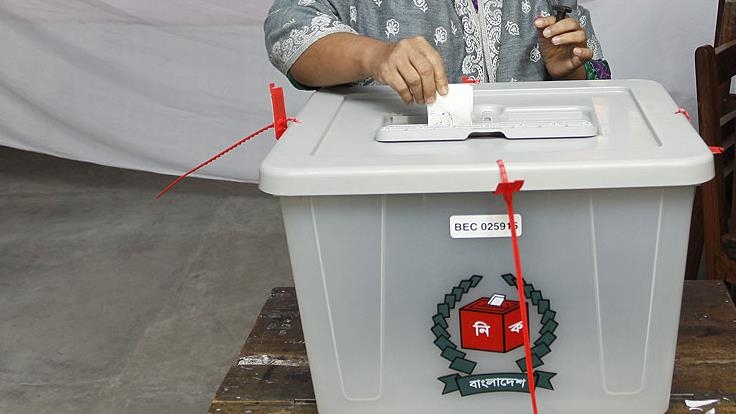
Bangladesh’s national election has drawn significant attention on the international stage, particularly from U.S. media and policy circles. The election is not merely an internal political process; it is being viewed as a critical indicator of South Asia’s geopolitical balance, regional security, human rights situation, and international diplomatic relations.
Prominent U.S. media outlets, including Reuters, the Associated Press (AP), The Washington Post, and The New York Times, have identified Bangladesh as a strategically important country, noting that the election is directly linked to political stability and democratic credibility with implications for international interests.
Reuters reports highlight that Bangladesh’s election represents a crucial political juncture in the competition for influence among China, India, and the United States in South Asia. The report emphasizes that the absence of free and participatory elections could negatively impact international diplomatic relations and economic cooperation. The Associated Press (AP News) describes the election as a “test of democracy,” pointing out that the electoral environment, opposition participation, and freedom of expression remain key concerns for the international community. The Washington Post’s analytical report notes that Bangladesh is currently in a geopolitical position where elections are not merely a transfer of political power but also relate directly to U.S. Indo-Pacific strategy, regional security, and economic stability. The New York Times evaluates the election through the lens of human rights, civil liberties, and democratic practice, noting that the international community will assess the election not only by its results but also by the transparency and legitimacy of the process.
China’s media has also consistently reported on Bangladesh’s election. Outlets such as Global Times, China Daily, Xinhua News Agency, and the South China Morning Post (SCMP) have analyzed the election in the context of political stability, regional economy, and China-Bangladesh strategic partnership.
Global Times notes that the election outcomes could affect China’s strategic interests in South Asia’s commercial and infrastructural projects. China Daily and Xinhua News Agency emphasize that a stable Bangladesh plays a critical role in China-Bangladesh trade relations and port infrastructure development. The SCMP contextualizes the election in terms of regional stability and the strategic balance of South Asia. Overall, Chinese media portrays the election results as a key indicator not just of political developments but also of China’s economic and strategic interests in the region.
Indian media outlets have also shown considerable interest in Bangladesh’s election. The Hindu, The Times of India, Indian Express, NDTV, and Hindustan Times have analyzed the election in relation to regional stability and South Asia’s political balance. The Hindu emphasizes that Bangladesh’s political stability is critical for the security of India’s northeastern states, cross-border trade, and regional connectivity projects. The election is described as a “significant political step that will determine the future trajectory of India-Bangladesh relations.” The Times of India and Indian Express note that the election is a strategic issue in maintaining the balance of power in South Asia, where China, India, and Western powers have vested geopolitical interests. NDTV highlights security concerns, border situations, and the context of regional counterterrorism, stressing that Bangladesh’s political stability is an integral element of India’s security framework. Indian media analysis generally portrays the election as not just a domestic political matter but also a key determinant in regional geopolitics.
Pakistani media has also regularly reported and analyzed Bangladesh’s election. Prominent outlets including Dawn, The News International, Express Tribune, and Geo News have linked the election to South Asia’s geopolitical reality. Dawn describes it as “an important chapter in South Asia’s strategic politics,” emphasizing that Bangladesh’s political stability is closely tied to the regional balance of power, India-China-U.S. relations, and subcontinental security structures. The News International highlights international pressure, diplomatic activity, and human rights issues, noting that Bangladesh’s election has become a sensitive issue in international politics, with Western countries playing a particularly important role. Express Tribune and Geo News depict the election as a key event in regional politics, analyzing it in the context of regional security, political stability, and international diplomacy. Pakistani media similarly sees the election as an integral component of South Asia’s broader geopolitical framework, rather than merely a national political issue.
The U.S. State Department has repeatedly emphasized the importance of “free, fair, and participatory” elections in Bangladesh. According to U.S. diplomatic sources, Bangladesh’s democratic continuity is vital for maintaining political stability in South Asia. Reports from congressional forums and think tanks describe Bangladesh as a strategic country, with the election closely tied to regional security, counterterrorism, migration, and economic growth.
International human rights organizations, including Human Rights Watch, Amnesty International, and Article 19, have expressed concern over the electoral environment, freedom of expression, opposition activity, and civil rights. U.S. media outlets reference these reports, noting that for Bangladesh’s election to be internationally credible, the process must ensure a trust-based political environment, not merely administrative arrangements.
Analysts argue that Bangladesh’s election is closely linked to the geopolitical realities of the Indo-Pacific region. U.S. media reports highlight that Bangladesh is now a key maritime and commercial hub in the Bay of Bengal, where political stability is essential for international trade and security. Reuters’ analysis notes that Bangladesh sits at the center of a strategic triangle involving China, India, and the United States, making its political process a critical indicator for international diplomacy.
International observers suggest that Bangladesh’s election is not just a domestic political event but an element of global politics. U.S. media reports view the election as a test of democratic continuity and regional stability in South Asia. Analysts also note that the election’s credibility could have long-term implications for international relations, foreign investment, trade cooperation, and diplomatic alignment.
From the perspective of U.S. media and international news agencies, Bangladesh’s election is a strategically, politically, and geopolitically significant event. It is not merely a government formation process but closely tied to South Asia’s political stability, human rights situation, international diplomatic relations, and Indo-Pacific strategy. Consequently, Bangladesh’s election is no longer just a domestic political matter—it is recognized as an important chapter in international politics.#
#Reuters, Associated Press / AP News, The Washington Post, The New York Times, Global Times, China Daily, Xinhua News Agency, South China Morning Post, The Hindu, The Times of India, Indian Express, NDTV, Hindustan Times, Dawn, The News International, Express Tribune, Geo News, U.S. State Department Statements, Human Rights Watch, Amnesty International, Article 19